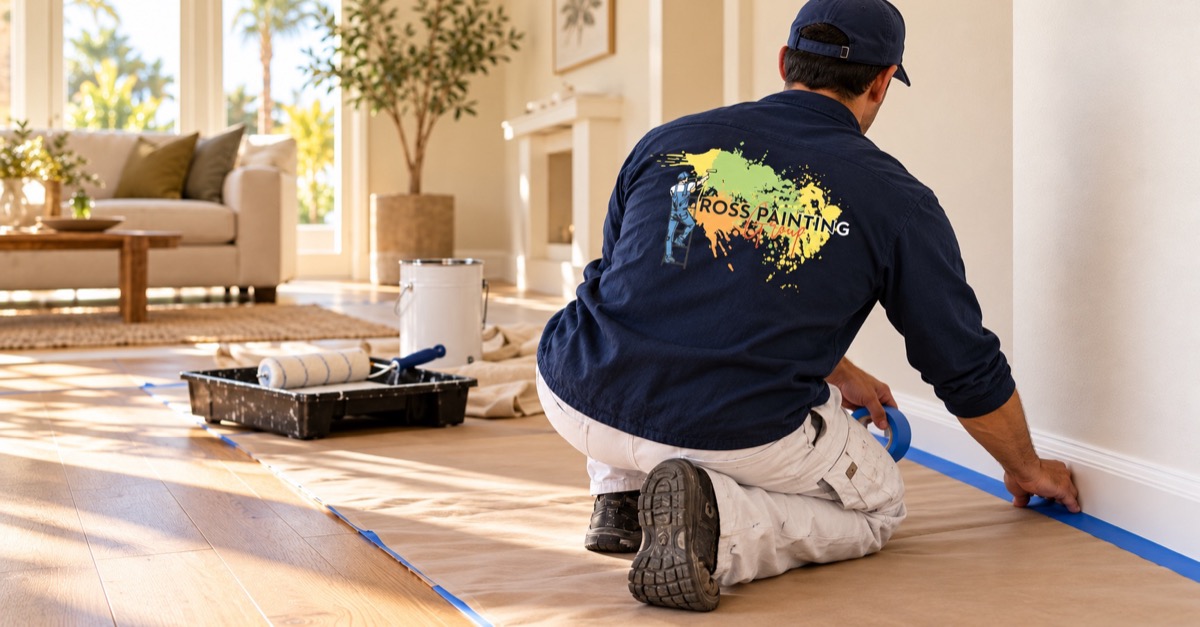
AI-generated editorial illustration; not a photograph of a completed Ross project.
Should You Paint Before or After Installing New Flooring?
If you are replacing floors and repainting the same rooms, booking each trade separately can leave a gap in the plan: who finishes the walls and baseboards after the last installation work? Agree on the sequence before either crew starts, not when a finished wall gets marked.
Ross generally prefers to carry out final interior painting after the main work by other trades, including flooring and baseboard installation. Victor also describes projects where painting happens first. The right conversation is about your actual work, protection and return visits—not a rule that one order works for every renovation.
Why Ross usually prefers final painting later
Victor’s reason is practical: other work can leave marks on newly painted walls. Installing baseboards can also leave nail holes and finishing work to address. If final painting comes after that work, the painter can plan the agreed wall and trim finish around the condition that remains.
That does not mean all preparation must wait, or that your flooring is ready for a painting crew immediately after installation. The floor installer and painter should confirm when access, protection and subsequent work are appropriate for the products being used.
Installing baseboards and painting them are separate steps
Ask who supplies and installs the baseboards, who handles the agreed filling or finishing preparation, and who paints them. “Trim included” is not a complete answer if one contractor means installation and the other means applying paint to existing trim.
During the estimate, identify whether walls, ceilings, doors and baseboards are all part of the repaint. If only the walls are included, do not assume new baseboards will automatically be finished as part of that price.
What if painting needs to happen before the flooring?
There can be projects where the agreed schedule puts painting first. If that is your plan, decide in advance which work is intended to be final and what, if anything, will be done after the flooring crew leaves. Make the return scope explicit instead of relying on an informal promise to “touch everything up.”
Clarify who reports new damage, who assesses the repair and whether a later visit is included or separately priced. This is a coordination decision, not a statement that one trade is responsible for every mark found after another trade has worked.
Why a touch-up may not settle the issue
Victor notes that local touch-ups are not always visually consistent with the surrounding wall. Depending on the existing finish and the repair, a larger area may need to be repainted for an even appearance. Do not treat a quick spot repair as a guaranteed invisible fix.
Before the project starts, agree on how any later painting will be evaluated. A walkthrough and a clear record of the agreed surfaces are more useful than assuming every post-installation mark is covered by the original painting scope.
Protection matters in either sequence
New flooring still needs a protection plan when painting follows installation. Paint manufacturers offer coverings intended to protect surfaces from spills and splatters, but that does not establish which covering, tape or timing is suitable for your particular floor.
Ask the floor installer and painter to agree on compatible protection, access routes and who puts protection down and removes it. Do not make a generic online instruction the approval for attaching tape or covering a newly finished surface.
Put these decisions into one shared schedule
- List the remaining work. Flooring, baseboards, wall repairs and the painting scope should be visible to everyone involved.
- Name the final painting stage. Decide when each room is ready and which surfaces will be finished at that point.
- Confirm access and protection. Ask when the floor can be worked around and how it will be protected.
- Agree on return visits. Identify any planned post-installation painting and how additional work will be approved.
- Plan the handover. Decide who checks the finished work and when furniture can be returned under the actual product and project instructions.
Bring the renovation sequence to your painting estimate
This guide deals with coordinating trades, rather than giving a fixed number of days or a new price for every renovation. For those separate questions, see the house-painting timeline guide and interior painting cost guide.
Planning interior painting in San Diego alongside new floors? Request an estimate and tell us which other trades are involved, whether baseboards are being replaced and when the rooms will be available. We can discuss the painting sequence as part of the agreed scope.
Ready to Get Started?
Free estimate, no obligation. We respond within 10 minutes.